

You wake up with your mind already moving—running through your to-do list, thinking about the decisions that need to be made, things that require follow-up, and tasks to be completed.
You wade through your day doing what needs to be done. If you were to stop and ask yourself what the feeling at your core is, would the answer be a sense of urgency? A feeling that you need to hurry? A drive to push toward completion and resolve things sooner rather than later?
Technically there may be nothing wrong, but you feel pressure.
I’ve noticed that same internal pressure in my own life—a steady push to be productive, to make something happen, to decide things quickly and move forward.
I stopped long enough to ask a simple question: What am I moving toward? I realized something important. The internal pressure urging me to rush forward wasn’t helping me live in clarity. In fact, it had the potential to pull me out of the alignment God was inviting me into.
Around that same time, I entered a season of fasting—not to force answers or manufacture direction, but to create space. I found myself drawn to the idea of fasting for clarity—slowing my pace enough to listen, notice, and receive what God might be offering beneath my urgency.
Fasting for Clarity Begins with Making Space
In Luke 5, the Pharisees question Jesus about fasting. They focus on the practice itself—when it should happen and what it should look like. Jesus responds by shifting the conversation. He points them away from rigid expectation and toward awareness, timing, and readiness.
Later in the same chapter, Jesus illustrates this through a moment I wrote about recently in Unity and Partnership: Who Holds the Net With You? (you can read that post here). After an unexpected catch of fish, the fishermen realize their nets are filling faster than they can manage. Instead of trying to control it on their own, they signal their partners to come and help.
“So they signaled their partners in the other boat to come and help them, and they came and filled both boats so full that they began to sink.”
~ Luke 5:7 (NIV)
The fishermen didn’t make the abundance happen. They noticed what was happening and responded wisely. They paid attention to the strain on the nets, and they recognized their limits. And they adjusted in a way that kept them aligned with what was unfolding instead of working against it.
Why Slowing Down Matters
That’s where fasting for clarity comes into focus.
Clarity doesn’t come from pushing harder or moving faster when pressure shows up. It comes from noticing what’s happening internally, especially when urgency or pressure begins to drive our decisions, and choosing to slow down long enough to discern where that pressure is coming from.
At times like this, a practice like fasting becomes especially meaningful.
Fasting creates a pause. It intentionally removes something familiar or habitual so we can pay attention to what surfaces underneath. When we fast, we begin to notice our internal responses more clearly: how quickly we want to act, how often we feel pressure to resolve things, how easily urgency takes the lead.
That noticing matters.
When we slow down instead of rushing forward, we give ourselves space to realign. We can listen more carefully, recognize God’s direction, and respond thoughtfully rather than reactively.
Fasting doesn’t produce clarity on its own, but it creates the conditions where clarity can be received. That kind of space isn’t passive. It’s intentional.
When Pressure Begins to Lead
Here’s something I’ve been learning to notice more clearly.
I can see what needs to be done. I’m capable of doing it. I know how to move forward, and I often can. But when an internal sense of pressure is driving that movement, I’ve learned to pause.
Years of responding quickly, solving problems, and staying productive can train us to rely on forward motion. We get used to doing what’s in front of us simply because we can. And while that ability can be a strength, pressure can quietly take the lead if we’re not paying attention.
When that happens, we may still be doing good and responsible things—but not necessarily in the timing, manner, or direction God is inviting.
That’s where awareness matters.
Instead of pushing through the pressure, I’ve been learning to bring it to God—to stop, pray, and ask where that urgency is coming from. When I choose not to work from that place of pressure, something often shifts.
As I slow down and become still, my body responds. The pressure eases and breathing is actually easier. And from that quieter place, discernment becomes clearer.
When pressure no longer sets the pace, the mind clears, the heart becomes attentive, and discernment has room to form.
Breakthrough Is Received, Not Achieved
One of the clearest insights I’ve written in my journal recently is this: Breakthrough is received, not achieved.
That truth reframes how I think about moments when clarity feels just out of reach. It reminds me that God’s direction doesn’t usually arrive because I pushed harder or moved faster. More often, it comes when I stop striving and create space to listen.
We see this pattern clearly in the story of Elijah. After a season of intense faithfulness and visible action, Elijah finds himself waiting for God to speak. He expects clarity to come through dramatic signs: wind, earthquake, fire. But Scripture tells us that God was not in any of those displays.
“…after the fire came a gentle whisper.” ~ 1 Kings 19:12 (NIV)
Elijah didn’t need to do more to earn God’s direction. He needed to pause long enough to recognize it. The breakthrough didn’t come through another act of strength or endurance. It came through attentiveness.
That distinction matters.
When pressure pushes us to act quickly, we often assume movement will produce clarity. But Scripture suggests something different. God’s guidance is often received when we slow down, listen carefully, and allow space for discernment to form. This is where fasting becomes such a meaningful practice.
Fasting doesn’t create breakthrough on its own. It helps remove the noise and urgency that can drown out clarity. It invites us into a posture of openness—one where we’re no longer trying to force direction, but instead learning to receive it.
It’s something we recognize when we’re attentive enough to hear.
Fasting for Clarity Is About Connection
This kind of fasting isn’t about withdrawal from life. It’s about deeper connection within it:
- Connection to your body—so you can recognize when urgency is driving instead of discernment.
- Connection to God—so you can notice His guidance rather than rushing past it.
- Connection to yourself—so your actions come from peace instead of pressure.
When space opens, clarity becomes easier to recognize.
A Word About Journaling
One of the simplest ways to support this kind of clarity is through journaling.
Writing creates a pause. It gives you a place to notice what’s happening internally, especially when urgency or pressure begins to shape your thoughts and decisions. On the page, patterns become easier to see. What feels hard to sort through in your head often becomes clearer when it’s written down.
Journaling doesn’t force insight. It creates room for it.
A Closing Prayer
God ~
Help me slow enough to hear You clearly. Where my body feels hurried, bring steadiness. Where my mind reaches for answers, bring peace. And where clarity is still forming, help me remain open to receive what You are already offering.
Amen
Want to go deeper?
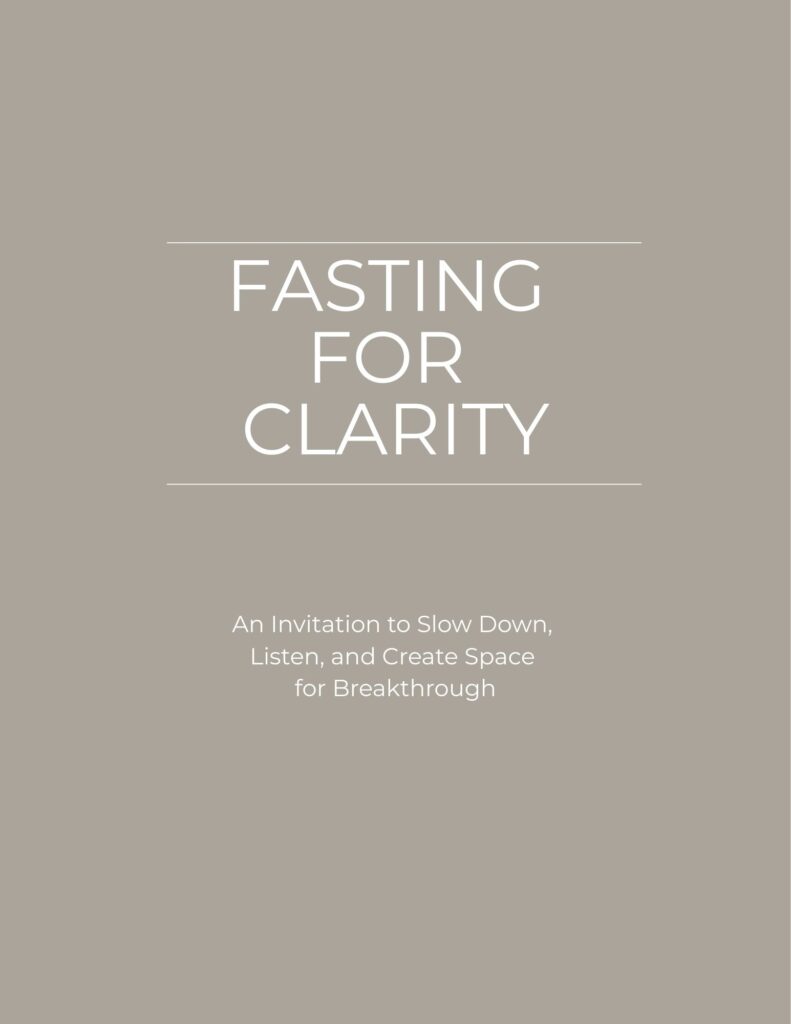
This 10-day companion journal offers daily Scripture, reflections, journal prompts, and closing prayers to help you reconnect with God and yourself. Breakthrough is received, not achieved. This is your invitation to exhale, tune in, and trust that clarity is on its way.
What helps you slow down and notice when pressure is leading instead of peace?
I’d love to hear how you make space to listen and reconnect with God in those moments.